
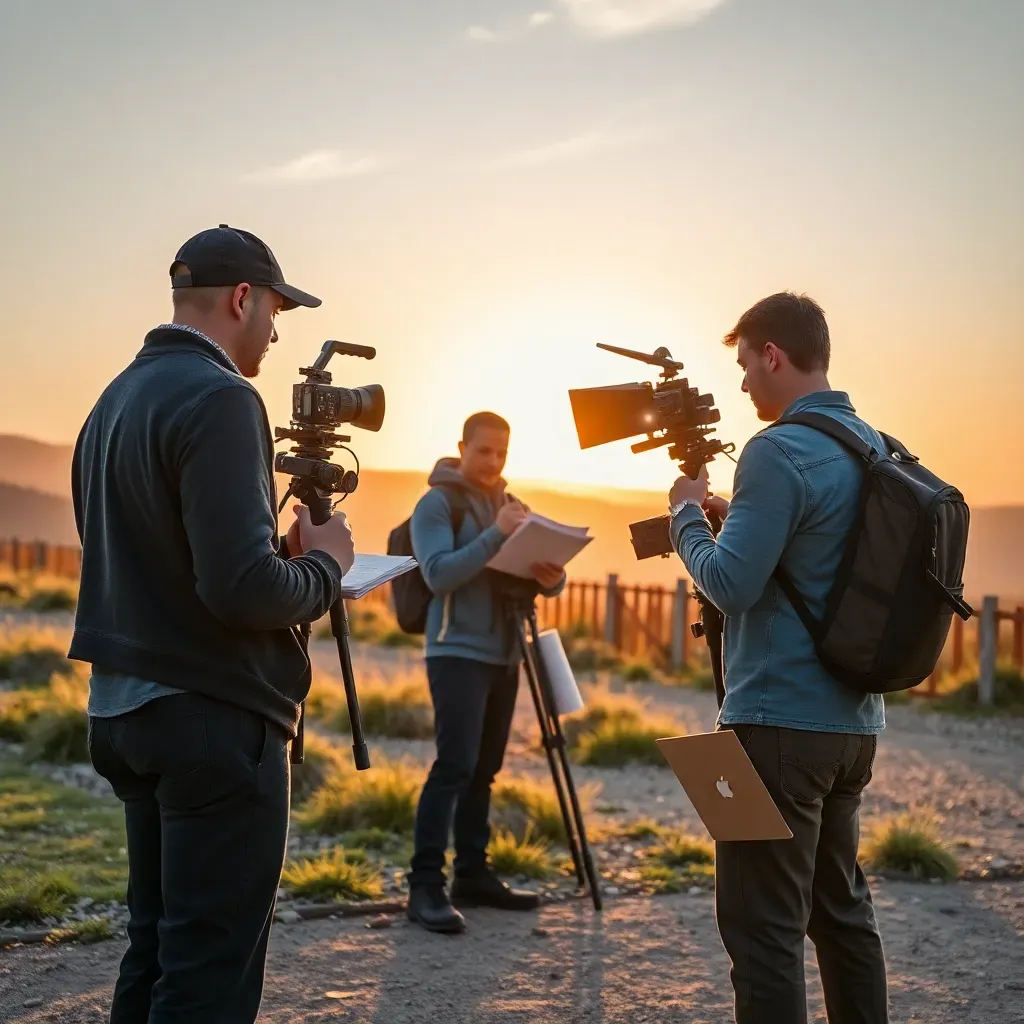
Filming in Cape Town: Permits, Studios & Production Logistics
From the City Film Permit Office and Cape Town Film Studios to Table Mountain, the V&A Waterfront and the DTIC rebate - everything international productions need to plan a shoot in Cape Town
Filming in Cape Town is one of the most efficient and cost-effective global shoots operations south of the equator. The city pairs Africa's largest purpose-built studio complex and a deep, English-speaking crew base with a permit landscape run by the well-organised City of Cape Town Film Permit Office, year-round shooting weather on the Atlantic seaboard, and visual signatures - Table Mountain, the V&A Waterfront, Bo-Kaap's painted streets, the Cape Point peninsula, the Winelands - that producers chase from London, Los Angeles and Mumbai. This guide walks through what global teams actually need to know to plan a production in Cape Town: where to file permits. This studios match which formats, which neighbourhoods deliver which looks, when to shoot, what the DTIC rebates brings to the budget, how load-shedding shapes scheduling, and how lead times fit with your shoot window. We work the Cape Town film offices, stages and crew rosters each week, so the focus here is operational, not editorial. Use it as a hub - each section links out to a deep-dive guide for the area you need to plan around.
As Fixers in South Africa, we bring local expertise to international productions filming in South Africa. Our team's deep knowledge of local regulations, crew networks, and production infrastructure ensures your project runs smoothly from pre-production through delivery.
ACT 01
Why Cape Town for Production
Industry Depth, Infrastructure and the Looks Producers Come For
Cape Town is the operational heart of South African inbound production. The reasons global teams keep choosing it for film in Cape Town go well beyond the postcards - it is one of the few cities in the southern hemisphere that combines a competitive cost base, a top-tier crew bench, English as a working language, and a studio belt large enough to host streaming-scale series alongside studio features.
- South Africa hosts hundreds of inbound features, series and commercials each year, with the majority crewed and serviced out of Cape Town
- The DTIC Foreign Film and TV Production Incentive returns 20-25% on qualifying ZAR spend
- English is the working language across all departments - no interpreter overhead on set
- Table Mountain, V&A Waterfront, Bo-Kaap, Cape Point, the Winelands and the Karoo edge all sit within a half-day drive of central Cape Town
Industry Depth and the Cape Town Production Ecosystem
Cape Town film production runs on a layered ecosystem that has been deepening for two decades of inbound work. The DTIC sets national policy and operates the Foreign Film and Television Production Incentive. The Cape Film Commission and the City of Cape Town Film Permit Office handle permits and location liaison at the local level. They are well known among global producers for being responsive and in practice clean. Major TV networks and global streamers (Netflix, Disney+, Amazon, Apple) all run shoots through Cape Town. Gear rental houses, post facilities, insurance brokers, customs brokers and legal counsel for global shoots all sit within the same Cape Town ecosystem. For inbound shoots, this density means fewer hand-offs and shorter pre-production cycles than in cities where the production stack is split across many distant centres.
Studio and Stage Infrastructure
The Cape Town studio belt - Cape Town Film Studios in Faure, Atlantic Film Studios in Milnerton, Sasani Cape Town and a growing roster of independent stages - gives the region more than 25,000 square metres of soundstage capacity within 45 minutes of central Cape Town hotels. That matters because global shoots can base talent and creative leads in Camps Bay, the V&A or the city bowl and still keep production trucks and stage builds inside a standard travel-time radius. Backlot space, water tanks (Cape Town Film Studios operates one of the largest film water tanks in the southern hemisphere) and stage tank facilities are all ready without leaving the Western Cape.
Crew, Talent and Cost Base
Cape Town crews are deep across each department. Cinematographers, gaffers, key grips, sound mixers, art directors, costume designers, hair and makeup, VFX supervisors and stunt coordinators are all ready at day rates that mostly run 30-50% below equivalent Los Angeles or London tariffs - a meaningful structural advantage even before the DTIC rebates is layered on. English fluency is universal at all grades, so there is no interpreter overhead on set. Casting directors handle global SAG and Equity-style negotiations as standard. The city has a deep bench of background talent that can match a wide range of looks - key for shoots doubling Cape Town for European, Mediterranean or generic 'somewhere' settings.
Signature Visual Looks
The visual reasons producers come to Cape Town are well known: Table Mountain for landmark setting up beats, the V&A Waterfront for modern urban and luxury, Bo-Kaap's pastel-painted streets for editorial and music video, the Cape Point peninsula for wild Atlantic landscapes, the Twelve Apostles drive for cinematic coastal road work, the Winelands (Stellenbosch, Franschhoek, Constantia) for European period and modern, and the Karoo edge within a few hours' drive for desert and arid-landscape work. Cape Town is also one of the world's most reliable doubles for European, Mediterranean and Australian settings - which is why so many series shoot here while being set somewhere else fully. Each look is briefed in detail below, with guidance on how shoot in Cape Town workflows actually clear them.
ACT 02
Filming Permits in Cape Town
City Film Permit Office, SAPS and the Permit Landscape
Cape Town filming permits are set up by the City of Cape Town Film Permit Office in partnership with SAPS (South African Police Service) and SANParks for national park locations. This section gives you the operational summary - for the full step-by-step on records, fees and edge cases, see our deep-dive guide.
- The City of Cape Town Film Permit Office is the primary contact for street, beach, park and public-domain filming inside the city
- SAPS handles traffic stops, road closures and security perimeters, set up through the City office
- SANParks (Table Mountain National Park, Cape Peninsula) issues its own permits with separate lead times
- Heritage and private institutions - Castle of Good Hope, V&A Waterfront, Robben Island - run their own filming offices
City of Cape Town Film Permit Office
The City Film Permit Office is the single entry point for most public-domain filming inside the City of Cape Town. They handle requests for streets, squares, beaches, parks, public open spaces and city-owned buildings. Standard street shoots with a small footprint (handheld, no truck, no crew base) are mostly clearable within five working days of a complete submission - one of the fastest standard turnarounds among major global film cities. Larger setups - full lighting packages, power packs, picture cars, base camp - extend the lead time to two to three weeks and trigger SAPS planning for any traffic management. The office reviews shoot synopses, neighbourhood impact, the production's local representative and proof of insurance before issuing the permit. Public-liability insurance of ZAR 10 million minimum is standard for most types.
SAPS and Traffic Coordination
Anything that affects road traffic, needs a security perimeter, or involves stunts, weapons, pyrotechnics, drones or large crowd scenes routes through SAPS via the City Film Permit Office. Closures along high-traffic corridors - the V&A way roads, Buitengracht, Strand Street, the M3 to Constantia, Chapman's Peak Drive - are in tech possible but need the longest lead times in the region. Three to six weeks is realistic for most road closures. Some axes are off-limits during peak commute or major event windows. Drone operations also need separate SACAA (South African Civil Aviation Authority) clearance and a registered ROC operator - drone work in or near off-limits airspace around Cape Town International or the Air Force Base Ysterplaat needs extra NOTAM planning.
Heritage Sites and Specialist Authorities
Filming inside or in the immediate perimeter of major heritage and private sites is ruled by each body's own filming office, not the City Film Permit Office. Robben Island runs its own permitting under the Robben Island Museum, with lead times of four to six weeks and substantial location fees because of the operational impact on tourist visits. The Castle of Good Hope, the V&A Waterfront precinct, Kirstenbosch National Botanical Garden and Cape Point all have their own filming offices and fee schedules. Lead times here run three to six weeks, location fees are major, and approvals are often conditional on shot lists, gear lists and at times script review. For a complete walkthrough of permit types, fees, records and rejection-recovery tactics, see our Cape Town permit deep-dive at /blog/film-permits-guide/.
ACT 03
Studios in Cape Town
Cape Town Film Studios, Atlantic Film Studios and Sasani Cape Town
Cape Town studios sit in a ring around the city, all reachable from central hotels in under 45 minutes. The lineup below is a working summary - the full sourcing guide with stage dimensions, ceiling heights, water tank specs and virtual production volumes lives in our dedicated studios article.
- Cape Town Film Studios (Faure) - flagship complex and the largest purpose-built film studio in the southern hemisphere, used for global features and series including Black Sails, Tomb Raider and Resident Evil
- Atlantic Film Studios (Milnerton) - well-equipped mid-to-large stages popular with global features and high-end commercials, close to Cape Town International Airport
- Sasani Cape Town - flexible mid-size stages popular with commercials, music videos and short-form work
- A growing roster of independent and warehouse-conversion stages across Maitland, Salt River and Paarden Eiland
Cape Town Film Studios - Faure
Cape Town Film Studios in Faure, about 30 minutes east of central Cape Town, is the largest purpose-built film studio complex in the southern hemisphere. Six soundstages totalling more than 8,000 square metres of stage space, a major water tank facility (one of the deepest production water tanks on the African continent), backlot, dedicated offices, on-site catering and full art-department workshops sit on the campus. It is the studio that hosted Black Sails for four seasons, the 2018 Tomb Raider feature, Resident Evil and a long roster of global features and streaming series. For inbound shoots running long-form drama or features that need stage tank work, Cape Town Film Studios stays the default first call when central Cape Town hotel bases are needed and when stage-to-location turnarounds need to stay inside an hour.
Atlantic Film Studios - Milnerton
Atlantic Film Studios in Milnerton, about 15 minutes north of the city bowl and very close to Cape Town International Airport, runs a tight cluster of mid-to-large soundstages with strong infrastructure for both global features and high-end commercial work. Several stages, dressing rooms, parking for production cars and on-site production offices sit on a single site - useful when production trucks would otherwise struggle with central Cape Town loading restrictions. The proximity to the airport is a meaningful advantage for shoots flying talent in and out for short blocks.
Sasani Cape Town and the Independent Belt
Sasani Cape Town and a growing roster of independent stages around Maitland, Salt River and Paarden Eiland host a high concentration of commercial, music video and short-form work, with mid-size stages well suited to fashion, beauty, automotive and editorial production. The wider northern Cape Town belt also concentrates art-department workshops, prop houses, gear rental and post facilities. This keeps build-day logistics inside one tight geography. For shoots that need a stage but do not need the scale or water tank of Cape Town Film Studios, this layer is often the most cost-effective answer.
Equipment, Lighting and the Rental Side
Cape Town's gear rental ecosystem is mature and competitive. Major rental houses cover Arri Alexa, Sony Venice, RED, full grip and lighting packages, and a broad library of vintage and anamorphic glass. Power packs, lighting trucks and trucking are abundant - a key operational fact given South Africa's power grid (see the load-shedding section below). For shoots building bespoke stages or running blue/green-screen and LED-volume work without committing to a full Cape Town Film Studios footprint, the independent stage belt combined with a standard gear package is often the most flexible option. For full stage matrices, daily rates and the stages best suited to virtual production and LED-volume work, see our Cape Town studios sourcing deep-dive at /blog/studio-soundstage-options/.
ACT 04
Locations in Cape Town
The Visual Categories That Bring Producers to the City
Cape Town's strength as a location city is the variety of distinct visual registers within a small radius. The types below cover most of what global shoots request - for the operational scout files (best times of day, light, foot traffic, permit difficulty), see our Cape Town location scouting guide.
- Table Mountain and the Twelve Apostles for landmark setting up beats and aerial work
- V&A Waterfront for modern luxury, harbour and global-city work
- Bo-Kaap for pastel-painted streets, editorial fashion and music video
- Cape Point peninsula for wild Atlantic coastline and end-of-the-earth landscapes
- Chapman's Peak Drive for cinematic coastal road sequences
- The Winelands - Stellenbosch, Franschhoek, Constantia - for European-doubling period and modern
- CBD heritage build style for European and Mediterranean doubling
- Atlantic seaboard beaches - Camps Bay, Clifton, Llandudno - for luxury and sunset registers
- Karoo edge within a 2-3 hour drive for desert and arid-landscape work
Table Mountain, V&A Waterfront and the Iconic Beats
Table Mountain dominates almost each Cape Town setting up shot. Most aerial work in the city builds around it. The Cableway operates its own filming protocols. The National Park surrounding the mountain (Table Mountain National Park, run by SANParks) needs its own permits with three to six week lead times for substantial setups. The V&A Waterfront is privately managed and runs its own filming office - it is one of the most pro location managers in the country, with reliable turnaround and clear fee schedules. The Waterfront delivers modern global-city, harbour and luxury registers that double comfortably for upscale Mediterranean and Asian port cities. The waterfront precinct is tourist-dense year-round. This means early-morning shoot windows (5-8 AM) are mostly the operational answer for any meaningful footprint.
Bo-Kaap, the CBD Heritage Belt and the Cape Doubling Look
Bo-Kaap's pastel-painted Cape Malay quarter is one of the most-requested editorial and music-video locations in the country. The City Film Permit Office has well-set up protocols for working there with respect alongside the resident community. The CBD heritage belt - Long Street, Loop Street, Bree Street, Greenmarket Square, the Company's Garden - delivers Cape Dutch and Victorian build style that doubles convincingly for European and Mediterranean settings. Both quartiers are tourist-dense and increasingly residential, so early-morning windows and tight footprint planning are standard operational answers. Many global shoots doubling Cape Town for somewhere else (London, Lisbon, Sydney) build their schedules around these heritage streets.
Cape Point, Chapman's Peak and the Atlantic Seaboard
The Cape Peninsula south of the city delivers some of the most cinematic coastal landscapes in the world. Cape Point and the Cape of Good Hope (inside Table Mountain National Park) need SANParks permits and lead times of three to four weeks for substantial setups. Chapman's Peak Drive between Hout Bay and Noordhoek is one of the most-shot scenic roads on the planet for car commercials, supercar reveals and travel sequences - SAPS road-management planning through the City office is needed for any meaningful setup. The Atlantic seaboard beaches (Camps Bay, Clifton, Llandudno, Hout Bay) deliver the luxury and sunset registers that bring fashion, beauty and lifestyle shoots to Cape Town through the southern summer. For the full taxonomy with permit difficulty ratings and shoot-window guidance, see our /blog/location-scouting-tips/ guide and our /services/pre-production/location-scouting-services/ page.
ACT 05
Seasonal Considerations and Load-Shedding for Filming in Cape Town
Best Months, Weather Reliability and Power Grid Planning
When you shoot in Cape Town matters - and how you plan around the South African power grid matters even more. The city is one of the most weather-reliable production destinations in the world. But load-shedding (scheduled power outages on the national grid) needs to be designed into the call sheet from day one.
- Best operational months: September-April (the southern hemisphere spring, summer and early autumn) with long daylight and minimal rain
- Winter (May-August) brings shorter days, occasional Atlantic fronts and cooler temperatures. But usable for many looks and quieter on the permit side
- Year-round filming is genuinely viable - Cape Town is one of the few global production cities that does not have a meaningful 'closed' season
- Load-shedding needs power packs redundancy and call-sheet planning - severity differs year to year and stage by stage
Weather, Light and the Production Calendar
Cape Town weather is unusually cooperative for global shoots. The southern hemisphere summer (December-February) gives 14+ hours of usable daylight, very little rain on the Atlantic seaboard, and the cleanest light on the Cape Peninsula. Spring (September-November) and early autumn (March-April) deliver the same long days with milder temperatures and the most stable wind patterns - mostly the operational favourite for both crew and talent. Winter (May-August) compresses shoot days to 9-10 hours of usable light and brings Atlantic frontal systems that can shut down outdoor work for half a day at a time. But it also delivers dramatic moody light that some shoots actively seek out. The city is one of the very few major global shoots destinations where you can credibly schedule a feature shoot in any month of the year.
Load-Shedding and Power Grid Planning
South Africa's national power utility schedules load-shedding (planned rolling blackouts) when grid demand exceeds supply. Severity is rated in stages and can change week to week. For production, the implications are operational rather than catastrophic: each studio of meaningful scale runs full backup generation, Cape Town Film Studios and Atlantic Film Studios are in short independent of the grid for production purposes, and any serious location shoot brings its own power packs package. The City Film Permit Office and SAPS planning stay operational through load-shedding windows. The discipline producers need: a clear call-sheet annotation of load-shedding stages, power packs redundancy on each location, fuel logistics planned for multi-day blocks, and post and rushes workflows that assume backup power on the editorial side. Cape Town fixers run this calculus each day - it is not an obstacle, it is a planning input.
Holiday and Event Windows to Plan Around
Several windows in the Cape Town calendar compress availability. The southern hemisphere summer (mid-December to mid-January) is the South African school holiday season - hotel and lodging inventory tightens significantly, day rates can lift, and many local crew take leave. Easter weekend and the school holiday window around it create similar pressure. The Cape Town Cycle Tour (March), the Two Oceans Marathon (Easter), the J&B Met (late January) and large global conferences at the CTICC can all close specific districts and absorb hotel inventory. The Cape Town International Film Market (late October) brings inbound talent into the city. None of these are filming blackouts in the way that Cannes or a major fashion week are. But they shape the operational calendar.
ACT 06
Crew Availability and Costs in Cape Town
Lead Times, Day Rates and the DTIC Rebate
Cape Town gives some of the most competitive crew economics in the global production market and one of the strongest cash rebates on the African continent. Plan crew bookings against the city's calendar and price the DTIC rebates into the budget from day one.
- DOPs, key grips, gaffers and sound mixers: 3-6 weeks lead time for top tier, 1-2 weeks for mid-tier
- Production designers and costume designers: 4-8 weeks for prep-heavy shoots, longer for period work
- Stunt coordinators, SFX supervisors and underwater units: 4-8 weeks for full-scale work
- DTIC Foreign Film and TV Production Incentive returns 20-25% on qualifying ZAR spend
Lead Times for Booking Key Roles
For a typical inbound feature or six-episode series shooting in Cape Town, plan six to eight weeks minimum from script lock to first day of principal photography just for crew booking. Director of photography, production designer and 1st AD are mostly the binding constraints - top-tier Cape Town talent is booked across many competing shoots year-round, and the city's roster of global-grade DOPs is finite. Mid-tier department heads and the bulk of crew (camera assistants, electricians, grips, sound utilities, costume team, hair and makeup) are mostly ready with one to two weeks notice outside the December-January peak. Commercials run on tighter schedules - typical lead time for a five-day Cape Town commercial is one to two weeks for crew, less if the agency has standing relationships with a Cape Town production services partner.
Day Rates and Budget Anchors
Cape Town crew day rates are one of the structural reasons global shoots choose South Africa. Camera assistants and electricians mostly run ZAR 4,000-6,000 per 12-hour day, gaffers and key grips ZAR 6,500-9,500, directors of photography ZAR 12,000-22,000, and production designers ZAR 14,000-25,000. Above-the-line global name talent operates on negotiated contracts that may not deliver the same cost advantage. But the broad below-the-line bench is a lot more competitive than equivalent London, New York or Sydney rates. PAYE, UIF and skills development levies need to be factored on each payroll line. Gear rental, location fees and base-camp logistics are similarly competitive, often 30-50% below comparable Western European or North American costs for equivalent specs.
DTIC and the Tax Incentive Picture
The DTIC Foreign Film and Television Production Incentive returns 20% of qualifying South African production expenditure (QSAPE) for most foreign shoots and 25% when post-prod is conducted in South Africa - with no per-project cap. Eligibility needs meeting the ZAR 12 million minimum QSAPE threshold and operating through a South African Special Purpose Vehicle. For a production with an USD 5 million Cape Town shoot landing ZAR 75 million of qualifying spend, DTIC can return ZAR 15-18.75 million against South African crew, locations, post and gear costs - meaningful budget headroom that often makes the difference between greenlight and pass. The full mechanics, application timeline and records needs are covered in our /blog/film-tax-incentives-guide/ - and our team can walk you through whether your production qualifies before you commit to a Cape Town production base. To start a Cape Town production conversation, contact us at /contact/ with your script status, shoot window and budget envelope.
ACT 07
Common Questions
How long do filming permits take in Cape Town?
The City of Cape Town Film Permit Office typically processes standard street filming permits within five working days of a complete submission - one of the fastest standard turnarounds among major international film cities. Larger setups with full lighting, generators, picture vehicles or base camp extend to two to three weeks because they require SAPS coordination. Road closures (Chapman's Peak Drive, Buitengracht, V&A approach roads, the M3) typically need three to six weeks. SANParks permits for Table Mountain National Park, the Cape Point area and Cape of Good Hope locations run three to four weeks. Robben Island, the V&A Waterfront precinct and the Castle of Good Hope all run their own permitting offices with similar lead times. Always build buffer for the December-January peak when permit volumes spike.
Can I shoot in public spaces in Cape Town?
Yes, with a film permit from the City of Cape Town Film Permit Office. Streets, beaches, public parks, squares and city-owned buildings are all accessible to filming with the right permit, public-liability insurance (typically ZAR 10 million minimum), and a local production representative. Anything affecting road traffic, requiring crowd control, or involving stunts and pyrotechnics also needs SAPS coordination through the same office. National park areas (Table Mountain, Cape Point) require separate SANParks permits, and certain heritage and private precincts (V&A Waterfront, Robben Island, Castle of Good Hope) run their own permitting. Handheld shoots with very small crews and no equipment footprint can sometimes proceed under simplified declarations - confirm with your fixer before relying on that route.
What is the best season to shoot in Cape Town?
Cape Town is one of the few global production cities where you can credibly schedule a feature shoot in almost any month, but the operational sweet spots are September-November and March-April - the southern hemisphere spring and early autumn, with long daylight, mild temperatures and stable wind patterns. The summer peak (December-February) gives the longest daylight and the cleanest light but coincides with South African school holidays, which tighten hotel inventory and lift accommodation costs. Winter (May-August) brings shorter days and occasional Atlantic fronts but delivers dramatic moody light some productions actively seek - and it is the quietest window on permits and crew availability. Year-round shooting is genuinely viable, which is one of Cape Town's structural advantages over most other international production destinations.
Do I need a fixer to shoot in Cape Town?
For practical purposes, yes. The City Film Permit Office and most location authorities require a local production representative who can respond to on-set issues, file paperwork in line with City standards, and act as the named contact on the permit. International productions also need a South African Special Purpose Vehicle to access the DTIC rebate, PAYE-registered payroll for any local crew, locally recognised insurance, and customs handling for equipment imports. A Cape Town fixer or production services company holds these relationships and capabilities and is generally faster, cheaper and lower-risk than building them from scratch for a single production. The fixer also runs the load-shedding planning and DTIC documentation discipline that determine how much of the headline rebate you actually realise.
What are typical day rates for Cape Town crew?
Cape Town crew day rates run roughly ZAR 4,000-6,000 per 12-hour day for camera assistants and electricians, ZAR 6,500-9,500 for gaffers and key grips, ZAR 12,000-22,000 for directors of photography, and ZAR 14,000-25,000 for production designers. PAYE, UIF and skills development levies apply on every South African payroll line and need to be in the budget from day one. Equipment rental, location fees and base-camp logistics are competitive with most international markets and typically 30-50% lower than equivalent London, New York or Sydney costs for comparable specifications. The DTIC 20-25% rebate offsets a substantial share of total Cape Town spend for qualifying foreign productions and is one of the structural reasons the city has remained internationally competitive for two decades of inbound work.
Ready to Roll
Planning a Production in Cape Town?
Whether you are scouting Atlantic seaboard locations for a feature, locking a stage at Cape Town Film Studios for a streaming series, or scheduling a five-day commercial around the December peak, our Cape Town team has the permits, crews and studio relationships ready to go. Filming in Cape Town is what we do every week - and we run the operational side, including load-shedding planning and DTIC documentation, so directors and producers can focus on the work. Contact Fixers in South Africa to discuss your next project.