
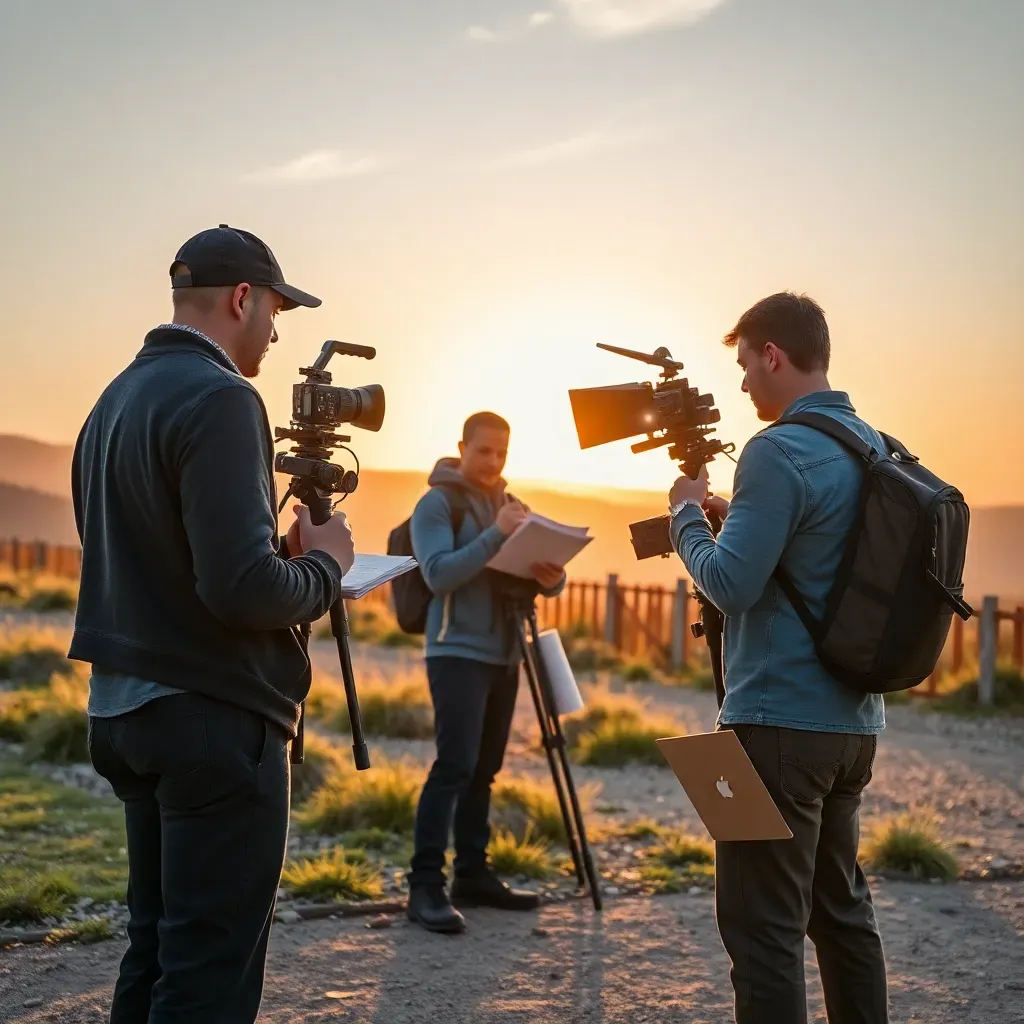
What Is a Film Fixer? The Complete Guide to Production Fixers
How local production fixers keep international shoots on track in South Africa and around the world — from SANParks permits and DTIC rebate applications to assembling Cape Town crew at short notice
If you have ever wondered what a fixer actually does in the film industry, South Africa is one of the best places to see the role in action. The country attracts shoots of each scale. Hollywood blockbusters drawn to Cape Town's coastline, Bollywood features shooting in Johannesburg, wildlife documentaries venturing into Kruger National Park — and each one of them depends on a local pro who knows the terrain, the rules, and the people. A film fixer is that pro: the person who turns a production's ambitions into a workable plan on the ground. They secure filming permits, hire local crew, handle customs for imported gear, manage relationships with authorities and communities, and solve the problems that inevitably arise when a foreign team operates in unfamiliar area. The term was borrowed from journalism, where correspondents relied on local contacts for access, translation, and logistics. The film industry took the concept much further. This guide explains what fixers do in detail, when you need one, how the role compares to a line producer or coordinator, what influences pricing, and how to select the right fixer for your project.
As Fixers in South Africa, we bring local expertise to international productions filming in South Africa. Our team's deep knowledge of local regulations, crew networks, and production infrastructure ensures your project runs smoothly from pre-production through delivery.
ACT 01
What Is a Fixer?
The Local Expert Behind Every Successful International Shoot
A film fixer is a local production pro responsible for setting up the logistical, administrative, and practical needs of global shoots in their area. The title is used loosely across several industries — journalism, corporate security, diplomacy — but within the film world it refers specifically to someone with production experience, deep regional knowledge, and the relationships needed to keep a foreign shoot running smoothly. In South Africa, where eleven official languages, three distinct production hubs, and a mix of city, provincial, and national permit authorities create real complexity, the fixer's role is specific key.
- Fixers hold detailed knowledge of local locations, rules, crew talent, and gear suppliers
- They act as the production's official point of contact with government bodies, vendors, and communities
- Most production fixers are multilingual and comfortable operating across cultural contexts
- The role can mean a single freelance coordinator or a full [shoot service firm](/services/)
How the Term Reached the Film Industry
Foreign correspondents coined the term: a fixer was someone who could 'fix' whatever problems arose in the field — arranging transport, locating interview subjects, getting past roadblocks, translating conversations. As global film production grew through the 1990s and 2000s, crews shooting in unfamiliar countries found they needed the same kind of local expertise, but at a much larger scale. Where a journalist's fixer might organise a single car and a translator for one day, a production fixer sets up weeks of multi-department logistics involving dozens of crew, many locations, major gear inventories, and budgets that demand careful local stewardship.
Solo Fixer vs Production Service Company
These terms overlap but are not identical. A solo fixer is mostly a freelancer — one skilled local pro who gives planning, troubleshooting, and translation. A shoot service firm is a registered business offering a full scope: crew hiring, gear sourcing, accounting, insurance, permit management, and full production oversight. In practice, many solo fixers have grown into shoot service firms as the global industry matured. South Africa's production scene has both: person fixers working with smaller documentary and branded content crews. Set up service firms supporting large-scale feature and series work at studios such as Cape Town Film Studios or Sasani Studios.
ACT 02
What Does a Fixer Do?
The Full Scope of Fixer Responsibilities, from Permits to Wrap
The day-to-day work of a production fixer is wider than most people expect. Their responsibilities stretch across the entire production lifecycle — from the first scouting trip to the final gear return — and touch each department. Here is what that looks like in practice, with examples drawn from the South African production environment.
- [Filming permits](/services/pre-production/film-permit-acquisition/) — handling the City of Cape Town Film Permit Office, Gauteng Film Commission, SANParks, and other authorities to secure the right approvals on time
- [Crew sourcing](/services/film-crew/) — tapping South Africa's large English-speaking crew base to fill each department, from camera and lighting to grips, drivers, and on-set security
- Gear — setting up with local rental houses such as Media Film Service and Panalux SA. Managing customs clearance for imported gear through OR Tambo or Cape Town International
- [Location scouting](/services/pre-production/location-scouting-services/) — matching creative briefs to South Africa's extraordinary range of landscapes: Table Mountain, Karoo desert, KwaZulu-Natal coastline, Johannesburg's urban streetscapes
- Government and community liaison — representing the production to city authorities, police services, community leaders, and property owners
- Translation and cultural mediation — bridging language gaps (South Africa has eleven official languages) and interpreting local customs for global crews
- Transport and lodging — organising car fleets, unit moves between Cape Town and upcountry locations, hotel blocks, and daily crew logistics
- Budget management — building accurate ZAR-based budgets, managing local expenditure, and preventing cost overruns that stem from unfamiliarity with South African pricing
- Emergency problem-solving — handling the unpredictable, from sudden Cape Town wind changes and load-shedding power cuts to last-minute permit amendments and crew emergencies
Pre-Production: Building the Foundation
Before cameras roll, the fixer lays the groundwork that sets whether the shoot succeeds or stumbles. In South Africa this starts with location research — not simply identifying visually stunning spots (there is no shortage). But confirming that each location is in use filmable, easy to reach for crew and gear trucks, and obtainable within the permit timeline. The City of Cape Town's Film Permit Office is well-organised and efficient. But national parks need SANParks permits with their own application process and lead times. The fixer handles all of this, as well as sourcing local crew matched to the production's tech needs, arranging gear rental, booking lodging in the right areas, and building a budget that accounts for costs an overseas producer would not expect — from power packs hire during load-shedding to the details of South African labour rules.
Production: Keeping the Machine Running
Once filming starts, the fixer becomes the production's operational anchor on the ground. They liaise with permit offices and location owners in real time, manage relationships with neighbours and bystanders, set up local crew, and handle whatever arises — weather shifts on Chapman's Peak, a permit condition that needs renegotiation, a gear failure that needs a same-day replacement from a local rental house. On documentary shoots, fixers often arrange contributors, identify interview subjects, and give editorial context about South African history, politics, or culture that shapes the story being told. On commercials, they keep the shoot moving fast enough to protect the schedule while managing the community impact of a large crew on location.
Administrative and Legal Compliance
Global shoots in South Africa face layered administrative needs: work permits for foreign crew via the Department of Home Affairs, gear customs declarations, compliance with the DTIC's Foreign Film and Television Production Incentive (which gives a 20-25% rebates on qualifying South African production expenditure), insurance, labour law obligations, and financial reporting for co-production treaties. The fixer sets up all of this — working with local accountants, immigration pros, and customs brokers to keep the production compliant while maximising the financial gains South Africa gives. Getting the DTIC forms right is not optional. It directly affects the production's bottom line.
ACT 03
When Do You Need a Fixer?
Five Situations Where Local Expertise Becomes Essential
Not each shoot needs a fixer. But the overwhelming majority of global shoots gain from having one. South Africa illustrates this clearly: the country is welcoming to foreign shoots and widely English-speaking, yet the logistical complexity of filming across its provinces, parks, and cities means local knowledge pays for itself almost at once.
- Your production is shooting in a region where you lack set up contacts and local experience
- The shoot involves many permit authorities — city, provincial, national parks, or military
- You need to assemble local crew and gear fast, drawing on a trusted network
- The production plans to apply for the DTIC rebates or a co-production treaty, needing careful records
- The timeline is compressed and a single logistical delay would cost more than the fixer's entire fee
Navigating a Multi-Authority Permit Landscape
South Africa's permit environment is manageable but layered. A shoot that spans Cape Town streets, a national park, and a heritage site may need separate permits from the City of Cape Town Film Permit Office, SANParks, and the provincial heritage authority — each with its own application process, timeline, and conditions. A fixer who has filed hundreds of these applications knows which offices to contact first, what supporting documents to prepare, and how to present the production in a way that accelerates approval. Without that knowledge, a production can lose weeks waiting for a response that a well-connected local could have resolved in days.
Maximising the DTIC Rebate
South Africa's Foreign Film and Television Production Incentive — administered by the Department of Trade, Industry and Competition — gives a 20-25% rebates on qualifying South African production expenditure. The incentive is generous, but the application and compliance needs are detailed. A fixer or shoot service firm skilled with the DTIC process makes sure that qualifying expenditure is correctly categorised, records meets the needed standard, and the production does not inadvertently disqualify itself through administrative errors. On a large production, the difference between a well-managed and a poorly managed DTIC application can amount to hundreds of thousands of rand.
Tight Schedules and High-Value Productions
Commercial shoots, branded content shoots, and news crews frequently operate under schedules where each hour counts. In South Africa, a fixer's existing relationships and local knowledge cut the learning curve that would otherwise consume days. When a global automotive brand needs a car commercial filmed along the Cape Town coastal roads within ten days, the fixer already has pre-scouted routes, permitted stretches, traffic management contacts, ready grip and camera crew, and a relationship with the local traffic authority that makes the timeline achievable. The fixer's fee is a fraction of a lost shooting day's cost.
ACT 04
Fixer vs Line Producer vs Production Coordinator
Understanding Where Each Role Fits
Productions often ask how a fixer differs from a line producer or a production coordinator. The three roles share some responsibilities but serve distinct functions. Knowing the boundaries helps you build the right team for a global shoot.
- A fixer adds local expertise, logistical planning, and area-specific problem-solving
- A line producer owns the overall shoot budgets, schedule, and operational execution
- A production coordinator manages administrative workflows — call sheets, travel arrangements, crew communications, and forms
- On global shoots, all three roles often operate at once with clearly defined lanes
Where the Responsibilities Overlap
The overlap is genuine: all three roles involve logistics, scheduling, and planning. A line producer on a domestic shoot handles many of the tasks that a fixer would cover on a global one — hiring crew, managing budgets, setting up permits. The distinction is territorial knowledge. A line producer based in London or Los Angeles cannot walk into the Cape Town Film Permit Office and negotiate an accelerated approval, source a backup power packs during load-shedding from a trusted supplier, or communicate production needs to a Zulu-speaking community leader in KwaZulu-Natal. The fixer fills precisely that gap. On smaller global shoots, the fixer may effectively serve as the local line producer. On larger shoots, they work alongside the line producer, handling local execution while the LP manages the global picture.
Matching Roles to Production Scale
For a small documentary crew travelling to a single location in South Africa, a fixer alone may be enough — they handle everything locally while the producer manages the project from abroad. For a medium-scale commercial, you mostly need a fixer for local logistics and either a line producer or production coordinator overseeing the wider schedule. For a large feature film or series — the kind of production that brings global cast to Cape Town Film Studios for months at a stretch — you need all three: a line producer managing the global budget, a production coordinator handling administrative workflows, and a local fixer or shoot service firm managing crew, permits, gear, and each other detail on the ground. The fixer's role scales to match the production's complexity.
ACT 05
What Does a Fixer Cost?
How Fixer Pricing Works and What Shapes the Investment
Fixer pricing depends on the scope of services, the length of the buy-in, the country, and the complexity of the production. We do not publish fixed rates — they differ too much by project to be meaningful — but knowing how pricing mostly works helps shoots plan realistic budgets.
- Person fixers mostly charge day rates that differ by country, region, and experience level
- Shoot service firms quote project-based fees that cover the full scope of local planning
- Full-service fees mostly represent a percentage of total local production spend
- The cost of operating without a fixer — permit rejections, crew miscommunication, logistical failures — nearly always exceeds the fixer's fee on global shoots
Day Rate vs Project Fee
A freelance fixer charging a day rate suits small shoots — a documentary crew of three to five people shooting for a few days, or a journalist needing local support for a specific story. For anything larger, a shoot service firm delivers better value by bundling planning, crew management, gear sourcing, permit handling, and production oversight into a single relationship. Comparing a freelancer's day rate to a service firm's project fee is misleading. The firm replaces many roles you would otherwise need to fill separately. In South Africa, where the favourable ZAR exchange rate already makes local production costs competitive, the value proposition of a full-service fixer is specific strong.
Factors That Influence Pricing
Several variables affect what you will pay: the country and region (costs in Cape Town differ from those in rural Limpopo), the length of buy-in across pre-production, production, and wrap, the size of the crew and gear package being managed, the complexity of locations and permits, and whether the production needs specialty services such as aerial filming planning, marine logistics, or wildlife safety management. South African shoots that plan to apply for the DTIC rebates should also factor in the extra administrative work this needs. The best way is to share a full project brief and receive a detailed, line-by-line quote you can review transparently.
Why Fixers Pay for Themselves
Productions that skip the fixer to trim the budget frequently spend more in the end. A single lost shooting day on a global shoots — caused by a permit rejection, a location owner withdrawing access, or a crew miscommunication — can cost far more than the fixer's entire fee. Beyond preventing problems, skilled fixers actively reduce costs through their knowledge of local pricing, their relationships with vendors who extend preferential rates, and their ability to build realistic budgets that head off the overruns caused by unfamiliarity with local markets. In South Africa, a fixer who correctly structures DTIC forms can recover 20-25% of qualifying local spend — an amount that dwarfs the fixer fee many times over.
ACT 06
How to Choose a Fixer
Six Criteria for Evaluating Your Production Partner
Not each fixer delivers the same standard of work. Choosing the right one is a decision that ripples through each aspect of the shoot, from permit approval speed to crew quality to budget accuracy. Here are the criteria that matter most.
- Shown experience with shoots of comparable scale and format
- A registered, insured business with transparent pricing and clear contractual terms
- Set up relationships with local government offices, crew networks, and gear suppliers
- Strong communication skills, multilingual skill, and responsiveness during pre-production
- Contactable references from recent shoots of similar complexity
- Cultural fluency — a fixer who knows both local realities and global shoots expectations
Evaluating Experience and Track Record
Request a production list and examine the scale, format, and recency of previous work. A fixer with deep documentary experience may not be the strongest fit for a large-scale commercial, and vice versa. In South Africa, look for experience in the specific regions and environments your production involves — a fixer who has managed shoots in Kruger National Park brings different knowledge than one whose experience centres on Johannesburg studio work. Contact references directly and ask specifically about problem-solving ability, communication quality, budget accuracy, and whether the reference would rehire. A fixer who has set up hundreds of shoots carries body-level knowledge that newer operators simply cannot replicate.
Checking Professionalism and Infrastructure
A reliable fixer or shoot service firm should be a registered South African business with production insurance, clear contractual terms, and the operational infrastructure to support your shoot. They should give itemised budgets, not rough estimates. Their responsiveness and thoroughness during pre-production is a reliable predictor of their on-set performance. Be cautious of fixers who cannot give a registered business address, proof of insurance, or a clear contract. The fixer handles major budgets and logistical responsibilities on behalf of global clients. Professionalism is a baseline need, not a bonus.
Testing the Relationship Before You Commit
The first inquiry and quoting process gives you a clear preview of the working relationship. Does the fixer ask detailed questions about your project before quoting, or do they throw out a number at once? Do they give suggestions based on local knowledge — a better location, a more practical schedule, a permit consideration you had overlooked — or do they simply agree with everything you propose? The best fixers push back constructively. They flag unrealistic timelines, suggest alternatives, and surface risks you had not considered. In South Africa, a good fixer might tell you that your preferred beach location needs a three-week permit lead time, then recommend a comparable stretch of coastline where permits can be turned around in five days. That kind of proactive partnership separates adequate fixers from top ones.
ACT 07
Real-World Examples of Fixers in Action
How Production Fixers Solve the Problems That Would Otherwise Stall a Shoot
The value of a fixer becomes clearest through real scenarios. Here are three anonymised examples from South African shoots that illustrate what a production fixer brings to a global shoot.
- Coastal logistics: setting up a car commercial across Cape Town's coastal roads with traffic management and tight permit windows
- Wildlife permits: managing SANParks applications and safety protocols for a multi-day documentary in a national park
- Crew surge: assembling a full stunt and action unit at short notice when a feature film's schedule shifted
The Coastal Car Commercial
A European automotive brand needed a 60-second commercial filmed along Cape Town's coastal roads. Chapman's Peak Drive, the Atlantic Seaboard, and a stretch near Camps Bay. The creative called for dawn light, closed-road sequences, and a tracking car rig. The production had ten days from brief to final shoot day. Our fixer set up with the City of Cape Town Film Permit Office for road closure windows, arranged traffic management through an accredited provider, sourced a tracking car and precision driver from a local action unit, and scouted two backup coastal routes in case weather forced a move. On the second morning, strong southeaster winds made Chapman's Peak unsafe for the rig car. The fixer redirected the unit to the pre-scouted backup route along False Bay within 90 minutes, preserving the day's schedule. The shoot wrapped on time. The client later noted that without local planning, the road closure permits alone would have taken longer than the entire production timeline.
The National Park Documentary
A wildlife documentary crew from the United Kingdom planned a five-day shoot inside a major South African national park. SANParks filming permits need a specific application process, site-level impact considerations, and compliance with park rules that limit crew size, car types, and filming hours near sensitive wildlife areas. Our fixer managed the SANParks application from first enquiry, prepared the needed site-level records, set up with park management on OK'd filming zones and times, and arranged accredited game rangers to go with the crew. When the production wanted to extend by two days after hitting top animal behaviour, the fixer negotiated an amendment to the existing permit within 24 hours — a process that would have taken the foreign crew far longer to handle independently. The rangers the fixer had selected also given editorial value, sharing behavioural insights the director incorporated into the final narration.
The Emergency Stunt Crew Assembly
A feature film shooting at Cape Town Film Studios had a schedule change that moved an action sequence forward by two weeks. The production suddenly needed a full stunt unit — coordinator, performers, rigging crew, and safety officers — assembled and rehearsed within eight days. South Africa has a strong stunt and action community built through decades of global shoots. But sourcing the right team under time pressure needs knowing who is ready, who has the right specialisations, and who works well together. Our fixer contacted set up stunt coordinators, confirmed availability, assembled a team of twelve with the specific skills the sequence needed (car work and high falls), arranged rehearsal space, and set up safety gear rental. The sequence filmed on the revised date with no overruns. The unit production manager later said the two-week acceleration would have been impossible without a local fixer who already had relationships with the stunt community.
ACT 08
Common Questions
What is a fixer in the film industry?
A fixer in the film industry is a local production professional who coordinates and facilitates international film, television, and media productions shooting in their country or region. Their responsibilities include filming permits, crew sourcing, equipment rental, location scouting, translation, transportation, and government liaison. The term was adopted from journalism, where foreign correspondents relied on local contacts for access and logistics. Today, fixers range from individual freelance coordinators to full production service companies offering end-to-end support.
What does a film fixer do?
A film fixer manages the complete range of local logistics for international productions. This covers researching and securing filming permits, sourcing and hiring local crew, arranging equipment rental, scouting and securing locations, liaising with government authorities and communities, providing translation and cultural mediation, organising transportation and accommodation, managing local budgets in the relevant currency, and solving unexpected problems as they arise during production. In South Africa, this also frequently includes navigating SANParks permits for national park shoots and preparing documentation for the DTIC production rebate.
How much does a fixer cost?
Fixer costs vary based on the country, production scale, engagement duration, and scope of services. Individual freelance fixers charge day rates that differ by market, while production service companies typically quote project-based fees covering full local coordination. South Africa offers strong value relative to European and North American production markets, with highly experienced crews and competitive local rates. Rather than evaluating the fixer's cost in isolation, most productions find the investment pays for itself by preventing delays, securing permits efficiently, and — in South Africa's case — correctly structuring DTIC rebate applications that can recover 20-25% of qualifying local spend.
What's the difference between a fixer and a line producer?
A fixer provides local expertise, logistics, and problem-solving specific to a particular country or territory. A line producer manages the overall production budget, schedule, and operational execution, typically from the production company's home base. On domestic shoots, the line producer handles many tasks that a fixer would cover on international productions. The core difference is territorial knowledge — a line producer from abroad cannot navigate South African permit offices, negotiate with local equipment vendors, or coordinate with authorities in local languages. On large international shoots, both roles work in parallel: the line producer manages the global picture while the fixer handles everything on the ground.
Do I need a fixer for a small shoot?
It depends on the location and your existing local knowledge. South Africa is largely English-speaking, which removes one common barrier, but permit requirements, crew sourcing, equipment logistics, and regional knowledge still present challenges for foreign crews working without local support. Even a small documentary crew benefits from a fixer when filming in national parks (SANParks permits are mandatory), when shooting in multiple municipalities with different permit processes, or when the timeline is tight enough that a single logistical delay would cost more than the fixer's fee. For small productions, the cost is modest and the risk reduction is substantial.
How do I find a fixer in South Africa?
The most reliable route is through established production service companies with a registered South African presence, a verifiable track record, and production insurance. The Cape Film Commission, Gauteng Film Commission, and NFVF (National Film and Video Foundation) can provide recommendations and maintain directories of accredited service providers. You can also request referrals from production companies that have filmed in South Africa previously — the industry is well-networked and reputations travel quickly. When evaluating candidates, request an itemised quote, check references from recent productions of similar scale, and confirm the fixer operates as a registered business. Our team provides comprehensive fixer and production services across South Africa, with local expertise in Cape Town, Johannesburg, Durban, and beyond.
Ready to Roll
Need a Fixer for Your Next Production?
Whether you are planning a documentary in Kruger, a feature film at Cape Town Film Studios, a commercial on the Atlantic Seaboard, or a branded content shoot in Johannesburg, our team provides comprehensive fixer and production services across South Africa and 35+ countries worldwide. We handle permits, crew, equipment, locations, DTIC rebate documentation, and every other logistical detail so you can focus on the creative work. Contact Fixers in South Africa to discuss your next project.